Who is buying after 55?
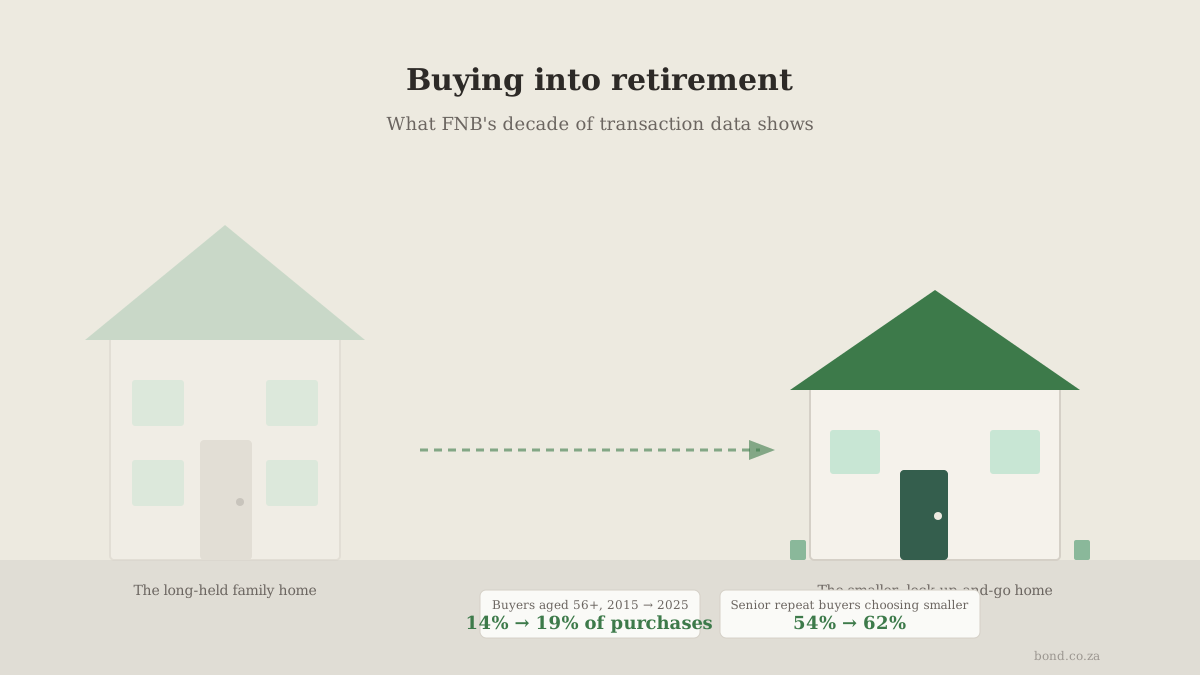
A growing share of South Africa's property market is being driven by people old enough to retire. And they are buying differently. New analysis from FNB Home and Structured Lending, drawn from property transaction trends and customer data between 2015 and 2025, shows buyers aged 56 and older rose from 14% of the market in 2015 to 19% in 2025. That is not a rounding error; it is a structural shift in who buys homes and what they buy.
Older buyers are increasingly experienced players, not once-in-a-lifetime purchasers. Repeat buyers now account for 70% of senior buyers, up from 56% a decade ago. These are homeowners who have transacted before, often selling a long-held family home and buying again, and they bring a clearer sense of what they want from their next property.
Downsizing is now the norm, not the exception
Among senior homeowners who sold a property and subsequently bought another, the share purchasing a smaller home climbed from 54% in 2015 to 62% in 2025. The older the buyer, the stronger the pull: 50% of homeowners aged 55 to 59 chose a smaller property, rising to 71% among those aged 80 and older.
“Rightsizing doesn't necessarily mean settling for less,” says Vanashree Naidoo, Product Head of Home and Structured Lending at FNB. “For many retirees, it's about finding a home that better aligns with the lifestyle they want to enjoy in their golden years.”
The logic is practical. Larger homes carry higher maintenance costs, greater security responsibilities and more demanding upkeep. On a fixed or reduced retirement income, those pressures bite hardest.
Sectional title gains, freehold slips
The property type seniors choose is changing too. Freehold homes' share of purchases made exclusively by senior buyers fell from 75% to 66% over the decade, pointing to growing interest in sectional-title developments with shared maintenance, better security and lock-up-and-go convenience. But the FNB analysis carries a caution worth repeating: sectional title is not automatically cheaper. Levies, special levies, complex rules and the financial health of the body corporate all belong in the total-cost calculation, not just the purchase price.
Retirees still carry bond debt — and balances are rising
Owning your home outright by 65 is no longer the default. Fewer retirees have active home loans than a decade ago, but among those who still carry mortgage debt, both average and median outstanding balances have increased. For anyone approaching retirement with a bond still running, the FNB findings make one thing clear: it matters whether repayments remain affordable once your salary stops. Selling may also release less equity than expected once agent fees, legal costs, moving costs and the price of the replacement home are counted. Our guide to home loans for pensioners covers the options on both sides of that decision.
The Western Cape keeps its pull
Location compounds the pattern. The Western Cape attracted the highest number of senior property purchasers in the study period and retained most seniors who sold and bought again within the province. Proximity to healthcare, family and established communities, not just lifestyle appeal, drives where this cohort lands.
What it means for you
If you are within ten years of retirement, the useful takeaway is not “downsize”. FNB's data does not say every homeowner should sell. It says the decision rewards being made early and deliberately. Naidoo's advice: assess your available equity, transaction costs, future affordability and evolving housing needs before retirement forces the question. “Retirement presents an opportunity to reassess what matters most and ensure that your home continues to support the life you want to lead,” she says.
Whether that means staying put, rightsizing or moving province, the homeowners who benefit most are the ones who ran the numbers while they still had choices. The home loan affordability calculator gives you a starting estimate, and if a smaller bond is part of the picture, our reverse mortgage guide explains how to unlock equity without selling.
(Published 23 October 2026. All figures and quotes cite FNB Home and Structured Lending analysis, 2015–2025, as reported by the Community Newsroom on 22 October 2026 — the primary FNB release was not directly retrievable at publication; see Sources. No interest rates, fees or thresholds are asserted in this article.)