The South African Reserve Bank’s Monetary Policy Committee meets on 23 September 2026, and that date is doing something predictable to home-loan applicants: it is pushing them toward a question they can actually answer today. Should your bond be fixed or variable?
Where the choice sits right now
The repo rate is 7.00% and the prime lending rate is 10.50%, after a 25 basis point hike in May 2026 — the first increase since May 2023 — which the committee left unchanged in July. Inflation cooled to 4.3% in July (down from 5.0% in June, per Stats SA), but it remains above the Reserve Bank’s 3% point target. The honest forecast for 23 September is a genuinely open one: hold, hike or cut are all live outcomes, which is exactly the kind of uncertainty fixed rates exist for — and the cost of each outcome is in our preview of the 23 September decision.
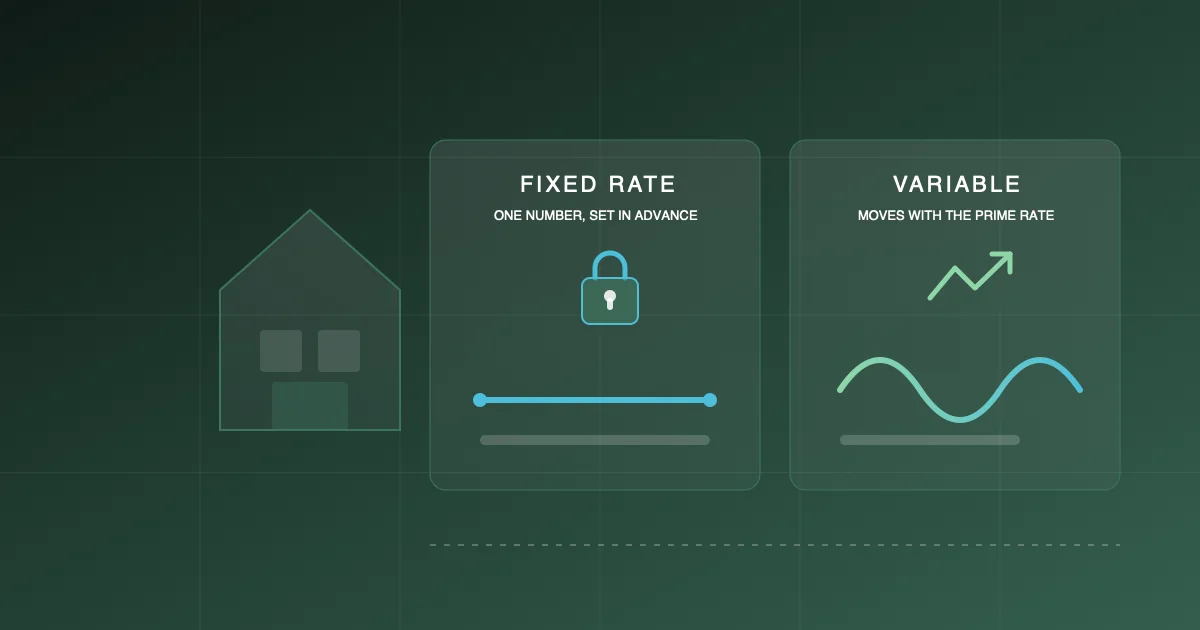
Most South African home loans are variable, meaning prime-linked: your instalment moves within weeks of every MPC announcement. A fixed-rate home loan does what the name says — one rate, agreed upfront, for a set window (typically one to five years, depending on the lender) — after which the loan usually reverts to a variable, prime-linked rate. The catch: banks price that certainty at a premium — and how wide that premium runs varies by lender, as our piece on what banks actually charge shows.
The real price of certainty
South African banks typically quote fixed rates at roughly 1–2 percentage points above the prevailing prime rate. On a R1 million bond over 20 years, the maths is stark: at 10.50% the instalment is about R9,980 a month; at 11.50% it is roughly R10,660 — about R680 more every month, before fees (illustrative reducing-balance calculation). That premium is the price of the insurance. For it to pay off, the variable rate you rejected must rise by more than your premium during the fixed window — or, if rates fall, you simply pay more while prime-linked borrowers benefit.
And rates do fall. Prime spent late 2025 at a cycle low of 10.25% after the cutting cycle that began in September 2024, and the July inflation print gives the committee more room to hold — or eventually ease — than it had in May. Fixing at today’s premium is a bet that the next one to two percentage points of rate movement are upward. It might be. It is not a certainty, and no lender will tell you otherwise.
A third factor: the benchmark itself is changing
There is also a quieter reason to understand your pricing before you sign. The SARB has proposed retiring the prime lending rate and pricing loans directly off the repo rate from 2027 — prime has been a fixed 350-basis-point markup on repo since 2001, and the change makes that markup explicit rather than folding it into a single number. Existing borrowers are unaffected, but new applicants should expect to see quotes expressed as “repo plus a margin” in future, and to compare offers on the margin, not the headline label. Our prime rate tracker keeps the current numbers side by side.
So which should you pick?
Strip away the forecasting and the decision has a clear structure. If one more rate hike would genuinely strain your budget — if prime at 11.50% or 12.00% means sleepless nights — a fixed rate buys you predictability at a known, budgeted price, and that has real value regardless of what the MPC does. If your budget has room to absorb a few hundred rand either way, the variable rate is usually cheaper over time: you skip the premium, and you automatically benefit if the next move is down. Our rate increase impact calculator shows what a one or two percentage point rise would add at your bond size.
Either way, run the numbers before you sign. Our bond calculator will show your instalment at today’s prime and at a stressed rate, and our home-loan rate comparison shows how the banks’ pricing actually differs. The cheapest insurance is knowing your own break-even point in advance.
What to watch next
- The August inflation print from Stats SA, expected before the 23 September MPC meeting — it will shape whether the committee holds, hikes or cuts.
- How banks price fixed-rate offers as the SARB’s proposal to retire the prime benchmark moves toward its 2027 transition window.
- The MPC statement’s vote split on 23 September, which signals how likely further moves are before year-end.
Rates and figures verified 6 September 2026 against SARB, Stats SA and National Treasury publications (see Sources).